SEO vs. SEA: Which One Actually Grows Your Local Business?
SEO for sustainability, SEA for speed. Discover which search strategy fits your budget and how to use both to dominate your local market.

Choosing between organic growth and paid ads isn’t about picking a winner, it is about aligning your budget with your timeline. While SEO builds a permanent asset, SEA delivers immediate leads, and the most aggressive local players use both to lock out the competition.
No time to read?
- SEO builds long-term equity and sustainable traffic without per-click costs.
- SEA provides instant visibility and precise targeting for immediate lead generation.
- SEM is the overarching strategy that combines both organic and paid search efforts.
SEO, SEA, and SEM: Clearing the Confusion
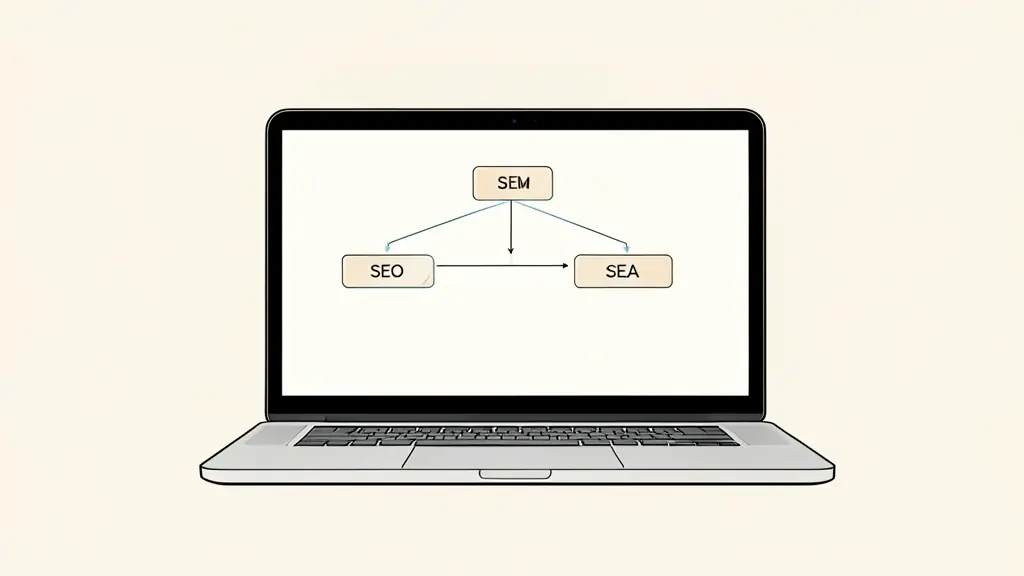
Stop overcomplicating the terminology. Most business owners get lost in the alphabet soup of digital marketing, but the hierarchy is simple. Search Engine Marketing (SEM) is the umbrella term. It encompasses every effort to increase visibility on a search engine results page (SERP), whether you pay for the placement or earn it.
Under that umbrella, you have two distinct engines: SEO (Search Engine Optimization) and SEA (Search Engine Advertising). When people discuss seo sea strategies, they are really talking about the balance between organic rankings and paid placements. To complete the ecosystem, some include SMO (Social Media Optimization), which leverages platforms like YouTube (the second-largest search engine in the world) to drive brand awareness.
In short: SEM is the entire game. SEO is the long-term endurance race. SEA is the high-speed sprint.
SEO: The Long-Game for Organic Authority
Organic search is about proving to Google that you are the most authoritative, relevant answer to a user’s query. This isn’t a « set it and forget it » project. It requires a three-pronged attack: Technical SEO (site speed, responsive design, and crawlability), On-page SEO (high-quality content and internal linking), and Off-page SEO (building high-authority backlinks).
A common misconception is that SEO is free. While you don’t pay Google for a Google Ads placement, you do pay for the production. Labor, content creation, and technical development are real costs. The difference is that these costs build an asset you own, rather than renting a spot on the page.
Patience is the barrier to entry here. Organic Search rankings don’t happen overnight. Depending on your local competition and the difficulty of your keywords, it can take several months or even years to hit the top 3 of the Map Pack. However, once you are there, the traffic remains sustainable even if you stop active optimization for a period.
SEA: The Fast-Track to Immediate Leads
If you need the phone to ring today, you don’t wait for an algorithm to notice you; you bid for the attention. SEA, primarily driven by Google Ads (formerly Google AdWords) and Bing Ads, operates on a pay-per-click (PPC) model. You enter an ad auction for specific keywords, and based on your bid and Quality Score, Google decides where your sponsored result appears.
The power of paid search lies in its surgical precision. You can implement geographic targeting to hit specific neighborhoods, audience targeting to reach specific demographics, and ad scheduling to ensure your ads only run during business hours (e.g., 8:00 am to 5:00 pm).
However, this visibility is a faucet. The moment you stop your daily budget or pause your campaign, your traffic drops to zero. When comparing PPC vs SEO cost, you are trading immediate scalability for recurring expenses. While SEO is an investment in equity, SEA is a direct cost of acquisition.
Side-by-Side: SEO vs. SEA Performance Metrics
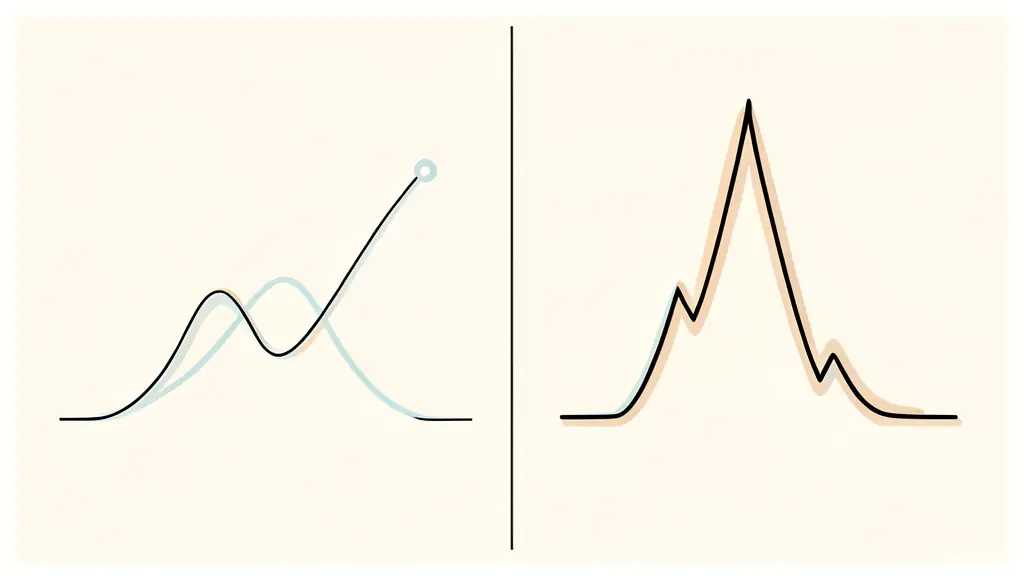
To understand which channel wins, you have to look at the data. SISTRIX estimates that only about 6.8% of Google clicks go to ads, meaning over 90% of users still prefer organic results. But here is the catch: WordStream found that for high-commercial-intent keywords, paid clicks can exceed organic clicks by almost 2:1. In fact, 64.6% of clicks go to paid results when a user specifically intends to purchase an item online.
For Local search visibility, the choice depends on your immediate goal.
| Metric | SEO (Organic) | SEA (Paid) |
|---|---|---|
| Speed of Results | Slow (Months to Years) | Immediate (Minutes) |
| Cost Structure | Upfront production cost | Ongoing CPC (Cost Per Click) |
| Sustainability | High (Lasting authority) | Low (Ends with budget) |
| Targeting Precision | Broad (Intent-based) | Granular (Geo, Device, Time) |
| Conversion Intent | Informational & Commercial | High Commercial Intent |
| Control | Algorithm dependent | Full control over ad copy |
The Strategic Trade-off: Pros and Cons
Every SEM strategy requires a trade-off between risk, time, and money. You cannot ignore one in favor of the other without leaving a gap for your competitors to exploit.
SEO Advantages:
* Builds long-term brand authority and trust.
* Lower cost per lead over time.
* Higher click-through rates for informational queries.
* Creates a « moat » that is difficult for competitors to breach.
SEO Disadvantages:
* Slow ROI.
* Vulnerable to Google algorithm updates.
* Requires constant technical and content maintenance.
SEA Advantages:
* Instant visibility on the SERP.
* Ability to test new landing pages and ad copy via A/B testing.
* Precise control over who sees your offer and when.
* Ideal for promoting seasonal offers or time-limited events.
SEA Disadvantages:
* Costs can skyrocket in competitive auctions.
* No lasting value once the budget is spent.
* « Ad blindness » where some users skip sponsored results entirely.
Decision Framework: Which One Should You Budget For?
Stop guessing where to put your money. Use this framework to allocate your budget based on your current business stage:
- New Brand or Service Launch: Lean heavily into SEA. You have zero organic authority, and you cannot afford to wait six months for the phone to ring.
- Established Local Authority: Shift the majority of your budget to SEO. Protect your rankings and double down on topical authority to reduce your dependency on paid ads.
- Seasonal Promotions: Use SEA. If you have a « Summer Special » that expires in 30 days, SEO is too slow. You need the immediate reach of a paid campaign.
- High-Intent Commercial Keywords: Use a Hybrid approach. If a keyword has a high conversion rate, you want to dominate both the paid and organic spots to maximize your lead capture.
- Low-Budget, Long-Term Growth: Focus on SEO. It is the only way to build a sustainable lead generation engine without a monthly check written to Google.
The Power Play: Integrating SEO and SEA
The most successful local businesses don’t choose; they integrate. This is where you create a competitive moat.
First, use SEA as a laboratory for your SEO. Instead of guessing which keywords will convert, run a targeted PPC campaign. Use the search term report to identify the exact phrases that lead to phone calls. Once you have this data, feed it into your SEO content strategy. You are effectively using paid data to eliminate the guesswork from your organic growth.
Second, consider the psychology of the SERP. When a user sees your business in a sponsored result and then sees you again in the top 3 organic results, it creates a perception of total market dominance. This « double exposure » increases trust and significantly boosts the likelihood of a click, regardless of which link they choose.
By aligning your landing page experience with your ad copy and backing it up with technical SEO health, you ensure that the traffic you pay for actually converts, while the traffic you earn stays loyal.
FAQ
Is SEO actually free?
No. While you don’t pay Google for clicks, SEO requires a significant investment in time, content creation, and technical expertise to rank.
How quickly can I see results from SEA?
Almost instantly. Once your campaign is approved and your bid is competitive, your ads can appear at the top of the search results within minutes.
Why does my traffic vanish when I stop my Google Ads campaign?
SEA is a ‘pay-to-play’ model. Unlike organic rankings which are earned, paid placements are rented; once the payment stops, the rental ends.
Envie d'aller plus loin ?
Laisse ton email, on te prévient dès qu'un nouvel article sort.