SEO Synonym Guide: How to Use Semantic Variation to Rank Higher
Stop keyword stuffing. Learn the best synonyms for SEO and the strategic way to use semantic variations to please both Google and your local customers.
Integrating a strategic seo synonym framework allows you to capture a broader range of search intent while improving content readability. By moving beyond exact-match repetition, you align your website with modern NLP algorithms that prioritize topical authority over keyword density.
No time to read?
- Use exact synonyms for clarity, but leverage related terms to capture broader search intent.
- Distribute semantic variants across H2s and body text to avoid keyword stuffing penalties.
- Diversify anchor text using synonyms to create a natural internal linking profile.
- Understand that Google’s NLP handles stemming and lemmatization, reducing the need for repetitive phrasing.
The Complete List of SEO Synonyms and Semantic Variants
To dominate the SERP, you must understand that users describe the same goal using different terminology. While « SEO » is the industry standard, utilizing search engine optimization variants ensures you capture traffic from users who search using more formal or broader business terms.
These terms are categorized by their proximity to the core meaning:
| Category | Terms | Intent |
|---|---|---|
| Exact Synonyms | Search Engine Optimization, Organic SEO | Direct technical search improvement |
| Near-Synonyms | Organic Search, Search Marketing, Search Optimization | Improving visibility via non-paid channels |
| Broad Related Terms | Website Optimization, Digital Advertising, Online Marketing | General growth of web presence |
Depending on the target audience, you may need to deploy different semantic clusters:
- Technical Focus: Website optimization, on-page optimization, off-page optimization.
- Growth Focus: Search marketing, organic search, content marketing.
- Commercial Focus: Digital advertising, paid search, online marketing.
Using these variations prevents the « robotic » feel of your copy and signals to search engines that your content is comprehensive.

Why Google No Longer Needs Exact Keyword Matches
Search engines historically had a literal understanding of keywords. If you didn’t use the exact phrase, you didn’t rank. Today, that approach is a liability. The transition toward semantic SEO means Google now employs Natural Language Processing (NLP) and machine learning to understand the relationship between words, regardless of the specific phrasing.
Modern algorithms use word embeddings to analyze unstructured textual data, allowing the engine to recognize that « organic visibility » and « SEO rankings » are functionally identical in most contexts. This evolution is driven by the rise of answer engines and voice search. When users interact with Siri, Alexa, or Google Home, they use conversational queries rather than fragmented keywords.
Because voice queries are more conversational than typed queries, Google has shifted from simple string matching to intent recognition. The engine no longer looks for a specific word; it looks for the meaning behind the query.
Strategic Placement: How to Use Synonyms in Your Content
The goal is to build a « moat » of topical relevance without triggering over-optimization filters. You should prioritize quality over repetition to ensure reader comfort and search engine clarity.
To implement organic search synonyms effectively, follow this distribution framework:
- The Hot Zones: Keep your primary term in the H1, the first paragraph, and the meta title. This establishes the core topic immediately.
- The Support Zones: Use semantic variants in H2 and H3 subheadings. This expands the lexical field and captures long-tail queries.
- The Body Text: Naturally rotate between synonyms to avoid keyword stuffing. If you used « search engine optimization » in the intro, use « organic search » or « website optimization » in the following paragraphs.
- The Metadata: Use variants in image alt text and internal link descriptions to provide additional context to the crawler.
This method resolves the problem of weak semantic coverage and ensures your content aligns with how real people actually speak and search.
The Anchor Text Playbook: Diversifying Internal and External Links
One of the fastest ways to signal « unnatural » behavior to Google is through repetitive anchor text. If every internal link pointing to your services page uses the exact same phrase, you risk an over-optimization penalty.
Effective lexical field optimization requires a diversified anchor text strategy. This helps the engine understand the relationship between pages through a variety of semantic lenses.
Implement these diversification tactics:
- Exact Match (Low Frequency): Use the primary term sparingly for high-priority pages.
- Semantic Variants: Use near-synonyms (e.g., replacing « SEO services » with « organic search growth »).
- Descriptive Phrases: Use longer, natural phrases that describe the destination page’s value.
- Branded Anchors: Mix in your business name to build authority and trust.
By varying your anchors, you create a natural link profile that mimics how other high-authority sites would link to you, which is a critical component of sustainable link building.
Stemming vs. Lemmatization: The Engine Behind Semantic Search
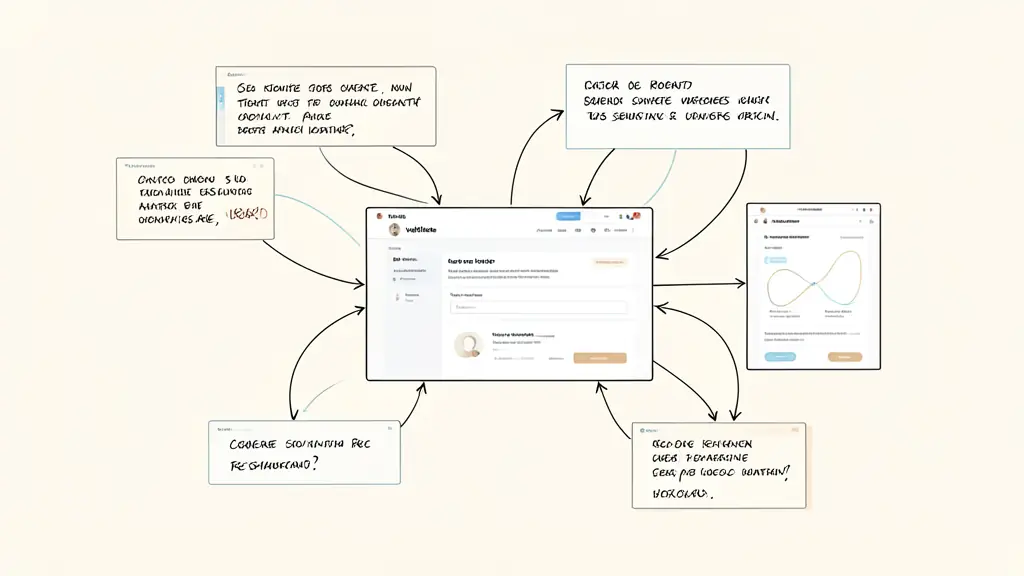
To understand why you don’t need to repeat every version of a word, you need to understand how the engine processes language. This is where anchor text variation is supported by the backend logic of search engines.
There are two primary linguistic methods used to simplify words:
- Stemming: This is a crude process of chopping off the ends of words to find the root. For example, « optimization, » « optimizing, » and « optimized » might all be reduced to the stem « optim. » It is fast but sometimes imprecise.
- Lemmatization: This is a more sophisticated approach that uses a dictionary to find the « lemma » or the base dictionary form of a word. It considers the context and the part of speech to ensure the meaning remains intact.
Because of these processes, you do not need to write « SEO optimization, SEO optimizing, and SEO optimized » in a single paragraph. The engine already knows they are variations of the same concept. Focus your effort on expanding the semantic field with different words entirely, rather than wasting space on grammatical variations of the same root.
FAQ
How do search engines actually understand synonyms?
They use Natural Language Processing (NLP) and huge datasets of human language to identify patterns. By analyzing the context surrounding a word, Google can determine if ‘organic traffic’ is being used as a synonym for ‘SEO results’.
When is it better to use the exact keyword instead of a synonym?
Use the exact primary keyword in high-impact areas like the H1, the URL, and the first 100 words of the page. This provides a clear, unambiguous signal to the search engine about the page’s primary topic.
Does using synonyms help with voice search?
Yes. People speak more conversationally than they type. Using natural synonyms and long-tail phrases makes your content more likely to match the natural language queries used in voice search.
Envie d'aller plus loin ?
Laisse ton email, on te prévient dès qu'un nouvel article sort.