2021 SEO Retrospective: The Blueprint That Changed Local Search
A strategic analysis of the 2021 SEO updates, from Core Web Vitals to search intent, and how to apply these foundational shifts to your local business.

The most critical takeaway from 2021 is that technical stability and user intent now outweigh legacy keyword tactics. To dominate the local pack today, you must prioritize page experience and high-relevance content over manipulative ranking schemes.
No time to read?
- Search intent shifted from keyword-matching to solving specific buyer needs.
The 2021 SEO Shift: From Keywords to User Experience
The landscape of 2021 seo marked a definitive end to the era of « gaming the system. » For years, many local businesses relied on keyword stuffing and rigid density targets to climb the Search Engine Results Page (SERP). That approach collapsed as Google shifted its focus from simple string matching to a holistic evaluation of Page Experience and Search Intent.
The core of this shift was the integration of Core Web Vitals, which forced a transition toward a user-centric model. It was no longer enough to have the right keywords if the page was frustrating to use. Google began prioritizing sites that provided a seamless, fast, and stable environment, effectively turning user experience into a primary ranking signal. If your site failed to satisfy the user’s immediate need for a fast, accurate answer, no amount of backlink volume could save your visibility.
Core Web Vitals and the Technical Performance Barrier
Technical performance stopped being a « nice to have » and became a barrier to entry. The rollout of Core Web Vitals introduced a strict set of metrics that Google used to quantify the actual human experience on a page. For local businesses, where a huge percentage of traffic comes from mobile devices on variable 4G or 5G connections, these metrics are make-or-break.
The most disruptive of these was Cumulative Layout Shift (CLS), which measures the unexpected movement of page elements. Imagine a user trying to click « Call Now » on a mobile site, only for a late-loading image to push the button down, causing them to click an ad instead. This doesn’t just kill your conversion rate; it signals to Google that your site is low-quality.
To maintain rankings, you must focus on:
* Largest Contentful Paint (LCP): Ensuring the main content of the page loads in under 2.5 seconds.
* First Input Delay (FID): Minimizing the time it takes for the page to respond to the first user interaction.
* Cumulative Layout Shift (CLS): Setting explicit dimensions for images and ad slots to prevent visual jumping.
Failure to optimize these leads to a higher bounce rate, as approximately 53% of mobile users abandon a site that takes over 3 seconds to load. Integrating these fixes is a prerequisite for any successful search intent optimization strategy.
Decoding Search Intent and Buyer-Centric Content
Content optimization moved away from « what the user types » to « why the user is searching. » The Google algorithm updates 2021 reinforced the necessity of buyer-centric content that addresses the specific stage of the customer journey.
Understanding the three pillars of intent is now mandatory:
* Informational: The user wants an answer (e.g., « how to fix a leaky faucet »).
* Navigational: The user wants a specific destination (e.g., « Local Plumbing Co. login »).
* Transactional: The user is ready to buy or book (e.g., « emergency plumber near me »).
The « helpful content » mandate means you can no longer rank with thin, generic pages. If a user is searching for a service, they don’t want a 2,000-word essay on the history of plumbing; they want to know your pricing, your service area, and your availability. The goal is to reduce friction between the query and the solution. When you align your content with the user’s actual psychological need, you build a moat around your business that competitors focusing on volume cannot breach.
The 2021 Algorithm Timeline: Core, Spam, and Product Updates
The year was defined by extreme search volatility, driven by three major core updates and several targeted spam crackdowns. Beyond the core shifts, the introduction of passage indexing changed the game: Google could now surface a specific, relevant section of a long-form page rather than ranking the entire URL. This means a single, comprehensive guide can now rank for dozens of different long-tail queries.
To maintain local SEO best practices, you must understand the timeline of these shifts to audit your historical traffic drops.
| Date | Update / Feature | Primary Impact |
|---|---|---|
| Feb 2021 | Passage Indexing | Surfacing specific sections of long pages in SERPs |
| May 2021 | Core Web Vitals | CLS and page speed become ranking factors |
| June/July/Nov | 3 Major Core Updates | Massive shifts in site authority and relevance |
| June/July/Nov | Spam Updates | Penalties for manipulative linking and low-quality content |
| April/Dec | Product Review Updates | Rewards for deep, evidence-based product reviews |
| Oct 2021 | IndexNow Release | Faster content indexing for Bing and partner engines |
These updates prove that Google is moving toward a « trust » model. Whether it is through the removal of link spam or the prioritization of YMYL (Your Money or Your Life) content, the algorithm is designed to filter out noise and reward genuine expertise.
Local Search Evolution: GBP and Zero-Click Reality
The « Local Pack » has become the primary battleground. With the rise of zero-click searches, users are finding the phone number, address, and operating hours they need directly on the SERP without ever clicking through to a website. This makes your Google My Business (now Google Business Profile) your most valuable digital asset.
The integration of passage indexing means that even if your website is comprehensive, your GBP must be the « hook » that captures the immediate local intent. Furthermore, the surge in voice search has shifted queries from « plumber Austin » to conversational phrases like « who is the best plumber open now near me. »
To survive the zero-click trend, you must:
* Optimize GBP Profiles: Use high-quality photos, detailed service descriptions, and frequent posts to keep the profile active.
* Implement Schema Markup: Use structured data to help Google understand your entity, services, and location, which increases the chance of winning rich snippets.
* Focus on Review Velocity: Implement a system to acquire consistent, positive reviews, as reputation is a primary driver for the Local Pack.
If you are struggling to keep up with these changes, you can scale your local visibility affordably by focusing on these high-leverage GBP tweaks before investing in expensive site overhauls.
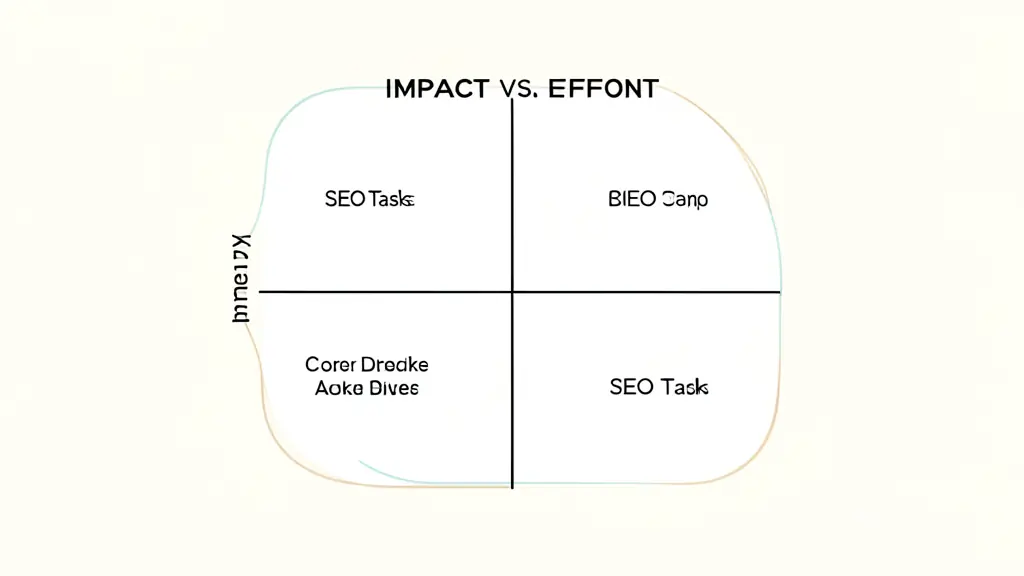
Implementation Roadmap: Impact vs. Effort Matrix
Not all updates are created equal. To avoid burnout and maximize ROI, you must categorize your SEO tasks based on the effort required versus the potential impact on your lead generation.
High Impact / Low Effort (The Quick Wins)
* GBP Optimization: Updating hours, adding photos, and responding to reviews.
* Title and Meta Tag Refinement: Fixing title rewrites by creating clearer, more descriptive page titles.
* Internal Linking: Connecting related local service pages to distribute authority.
High Impact / High Effort (The Long-Term Moat)
* Core Web Vitals Remediation: Fixing CLS and LCP issues through technical audits and server optimization.
* Content Gap Analysis: Rewriting thin content to match buyer-centric search intent.
* High-Authority Local Link Building: Moving away from directory spam toward genuine local partnerships.
Low Impact / Low Effort (The Maintenance)
* Updating Old Dates: Changing « 2020 » to « 2021 » in blog headers.
* Basic Image Alt-Tagging: Ensuring all images have descriptive text for accessibility.
Prioritize the « Quick Wins » to stabilize your rankings, then allocate your budget toward the « Long-Term Moat » to ensure your business remains the #1 choice in your neighborhood.
FAQ
What is passage indexing and how does it affect my rankings?
Passage indexing allows Google to index and rank specific sections (passages) of a page, even if the overall page isn’t a perfect match for the query. This means long-form, comprehensive guides can rank for multiple niche queries.
How do I optimize for voice search in a local context?
Focus on conversational, long-tail keywords that mirror how people speak. Ensure your GBP is fully optimized and your content answers ‘who, what, where, and how’ questions directly.
What are rich snippets and why are they important for 2021 SEO?
Rich snippets are enhanced search results (stars, prices, FAQ) powered by structured data. They increase click-through rates (CTR) by providing immediate value and trust signals directly on the SERP.
Envie d'aller plus loin ?
Laisse ton email, on te prévient dès qu'un nouvel article sort.