Restaurant SEO: How to Dominate Local Search and Fill More Tables
Stop guessing why your competitors are busier. Master the restaurant SEO framework to dominate the Map Pack and drive more reservations and orders.
Most restaurant owners rely on hope and word-of-mouth to fill their tables, but the real growth happens when you capture the « hungry » searcher in real-time. To dominate your local market, you need a system that turns a Google search into a confirmed reservation or a direct order.
No time to read?
- Prioritize your Google Business Profile as the primary discovery point.
- Target ‘Cuisine + Location’ keywords specifically in your homepage headlines.
- Eliminate friction by integrating direct reservation and ordering systems.
- Optimize for mobile speed and accessibility to capture ‘on-the-go’ diners.
What Is Restaurant SEO and Why It’s Your Biggest Growth Lever
Restaurant SEO is the strategic intersection of local discovery and immediate conversion. It is not about ranking for generic terms; it is about ensuring that when a potential customer searches for a specific craving in your neighborhood, your establishment is the first and most appealing option they see.
The link between search visibility and your bottom line is direct. High visibility in local search results leads to a measurable increase in table bookings, takeout orders, and walk-in foot traffic. By optimizing your Google Business Profile for restaurants, you stop leaving your revenue to chance and start building a predictable pipeline of local leads. In an industry where 91% of guests prefer to visit a restaurant’s website before deciding to order takeout or delivery, your digital presence is effectively your front door.
The GBP Power Play: Converting Searchers into Diners
Your Google Business Profile (GBP) is the most critical asset for driving local search visibility. For most users, the GBP is the only thing they interact with before deciding to visit. If your profile is incomplete or looks neglected, you are handing customers to your competitors.
To dominate the Map Pack, focus on these non-negotiables:
- High-Resolution Visuals: Upload professional photos of your best-selling dishes and your interior. People eat with their eyes first; blurry photos kill conversions.
- NAP Consistency: Ensure your Name, Address, and Phone number (NAP) are 100% accurate and identical across your GBP, website, and all online directories.
- The Menu Feature: Do not just upload a photo of your menu. Use the native GBP menu tool to add specific items. This helps Google understand your offerings and match them to specific user queries.
- Attribute Completion: Fill out every relevant attribute (e.g., outdoor seating, wheelchair accessible, happy hour). These act as filters for users, and missing them can exclude you from specific searches.
- Review Acquisition System: Implement a systematic process to ask for reviews. Use tools like the Owner.com automated review flow to maintain a steady stream of fresh, positive feedback.
Respond to every review, both positive and negative. This doesn’t just build trust with the customer; it signals to Google that your business is active and engaged.
Mapping Your Homepage for ‘Cuisine + Location’ Intent
Many restaurant websites are treated as digital brochures, lacking any strategic structure. To capture high-intent traffic, you must implement a specific restaurant keyword optimization strategy on your homepage.
The goal is to align your site with how people actually search: [Cuisine Type] in [City/Neighborhood]. Instead of a vague headline like « Welcome to Our Table, » use a clear, descriptive H1 that tells Google and the user exactly what you offer and where you are located.
| Element | Optimization Strategy | Example |
|---|---|---|
| Page Title | [Cuisine] Restaurant in [City] | Best Italian Restaurant in Chicago |
| H1 Headline | [Cuisine] in [Neighborhood/City] | Authentic Neapolitan Pizza in Miramar |
| Meta Description | Value proposition + Location + CTA | Experience the best pasta in Lakeside. Book your table online today! |
| Body Content | Blend cuisine phrases and dish keywords | « Our handmade ravioli makes us the top-rated Italian spot in Chicago. » |
By mapping your homepage this way, you create a strong signal of topical relevance, making it significantly easier for Google to rank you for « near me » searches and specific cuisine queries.
Reducing Friction: The SEO Impact of Reservations and Ordering
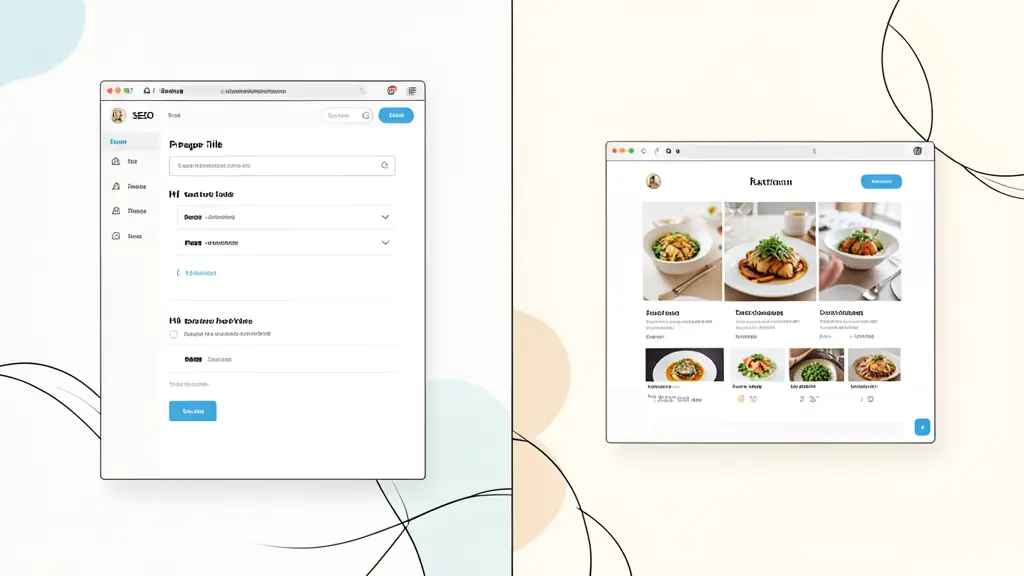
Search visibility is useless if the user experience is frustrating. When a visitor lands on your site and cannot find a way to book a table or order food within seconds, they bounce. These « behavior signals » (high bounce rates, short session durations) tell Google your site isn’t meeting user needs, which can negatively impact your rankings.
Integrating direct booking tools like Resy or OpenTable and implementing an online ordering (OLO) system does more than just increase revenue; it improves your SEO. These integrations:
- Increase Engagement: Users spend more time on your site interacting with the booking or ordering interface.
- Reduce Friction: Direct online orders remove the need for users to leave your site for a third-party delivery app.
- Create Trust Signals: Professional reservation systems act as a mark of legitimacy.
Furthermore, when you simplify the ordering process, it becomes easier to get more restaurant reviews. A seamless direct-ordering experience allows you to trigger a review request immediately after the meal, creating a virtuous cycle of improved reputation and higher local search rankings.
The Mobile-First Dining Experience
Google uses mobile-first indexing, meaning it predominantly uses the mobile version of your content for indexing and ranking. For a restaurant, this is non-negotiable because the vast majority of « hungry » searches happen on a smartphone while the user is on the move.
To optimize for the mobile diner:
- Eliminate PDF Menus: Nothing kills a mobile experience faster than forcing a user to download a 10MB PDF and pinch-to-zoom to see the prices. Use a mobile-responsive HTML menu.
- Prioritize Page Speed: Hungry users are impatient. If your site takes more than a few seconds to load, they will go back to the search results and click on the next competitor.
- Implement Click-to-Call: Your phone number should be a prominent, clickable button. Users should be able to call you in one tap.
- Simplify Navigation: Place your « Order Now » and « Book a Table » buttons in a sticky header or a clear CTA banner at the top of the page.
A fast, mobile-friendly site reduces bounce rates and increases the conversion rate from a searcher to a diner.
Critical Restaurant SEO Mistakes That Kill Your Visibility
Even a great restaurant can be invisible if these common errors are present. Fix these immediately to stop leaking leads:
- NAP Inconsistency: Having different addresses or phone numbers listed on Yelp, Tripadvisor, and your own website. This confuses Google and erodes trust.
- Ignoring Negative Reviews: Leaving a 1-star review unanswered signals to potential customers (and Google) that you don’t care about the guest experience.
- Overloading Pages with Unoptimized Images: High-res food photos are great, but if they aren’t compressed, they will tank your mobile loading speed.
- Reliance on Third-Party Platforms Only: If you only exist on delivery apps and don’t have your own optimized website, you are paying a « tax » on every order and losing control over your search visibility.
- Vague Meta Data: Using « Home » as your page title instead of your cuisine and location. This is a wasted opportunity to tell Google exactly what you do.
Correcting these errors transforms your website from a static page into a high-performance acquisition tool.
FAQ
Is restaurant SEO worth the investment compared to social media ads?
Yes, because SEO captures ‘high-intent’ users actively searching for a place to eat right now, whereas social ads are often disruptive. SEO builds a long-term asset that generates organic traffic without a per-click cost.
How often should I update my Google Business Profile?
Weekly is ideal. Post new food photos, update seasonal menu items, and respond to new reviews promptly to show Google and customers that your business is active and engaged.
Should I use a PDF for my menu?
Absolutely not. PDFs are terrible for SEO and a nightmare for mobile users. Use HTML menus or integrated ordering systems so Google can crawl your dishes and users can read them easily.
Envie d'aller plus loin ?
Laisse ton email, on te prévient dès qu'un nouvel article sort.